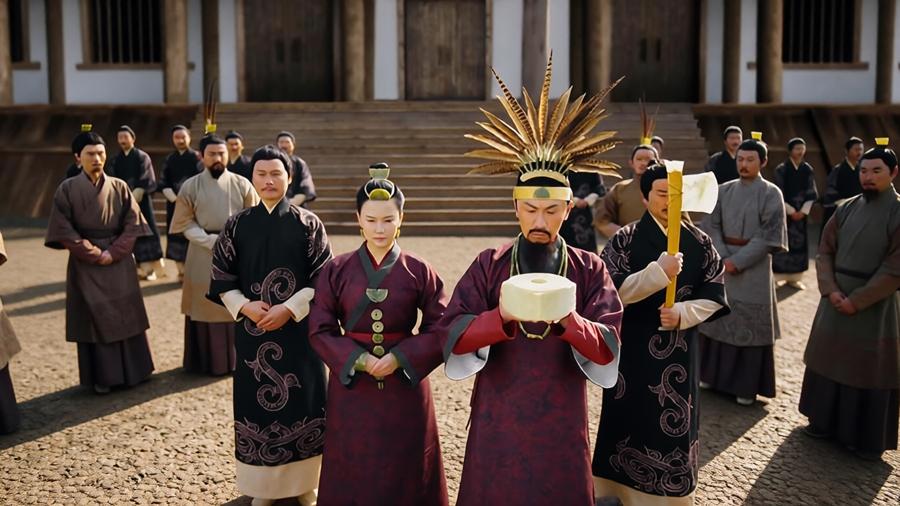
In the thousands-year history of Chinese jade culture, the ancient shamanic jade tradition is the spiritual source of all jade-related heritage. Unlike later generations who regarded jade as a moral symbol or decorative ornament, ancient Chinese ancestors first saw jade as a sacred medium connecting humans and deities, heaven and earth, and a core ritual tool for shamans. This sacredness derived from primitive religion elevated jade above ordinary stones, making it a spiritual totem throughout Chinese civilization.
1.The Origin of Shaman-Jade: Symbiosis in the Ancient Theocratic Era
Within the primitive religious system of ancient China, shamans and jade forged an indivisible symbiotic relationship from the very beginning. As intermediaries between humans and the divine, shamans were responsible for worshipping heaven and earth, conducting divination for blessings, and driving away plagues and misfortunes. Owing to its unique physical properties and cultural imagery, jade became the core sacred token and ritual tool for shamans to exercise theocratic power and communicate with deities.
- Jade as a sacred object embodying cosmic qi: Ancient ancestors believed jade was a treasure formed from the essence of mountains and rivers and the condensed vital energy of heaven and earth, possessing divinity transcending ordinary stones. Its warm, lustrous texture and enduring quality that defies decay over millennia aligned perfectly with the human imagination of divine eternity and spiritual permeability. It was thus recognized as a numinous object capable of bearing divine power and transmitting the will of the gods, rather than a mere decorative stone. Only shamans holding theocratic authority were qualified to possess and use jade artifacts, making jade a visual marker of shamanic identity.
- Monopoly of jade power under the unity of shamanism and politics: In Neolithic cultures such as Hongshan and Liangzhu, theocratic and secular power were highly integrated, and shamans served as both religious leaders and tribal chiefs. The production, distribution and use of jade artifacts were completely monopolized by the shaman class, and ordinary clan members had no right to own them. This monopoly not only reinforced the authority of shamans, but also stripped jade entirely of its practical attributes, turning it into a symbol of theocratic power and ruling legitimacy — to possess jade meant to hold the power to communicate with heaven, and thus to have the legitimacy to rule the tribe.
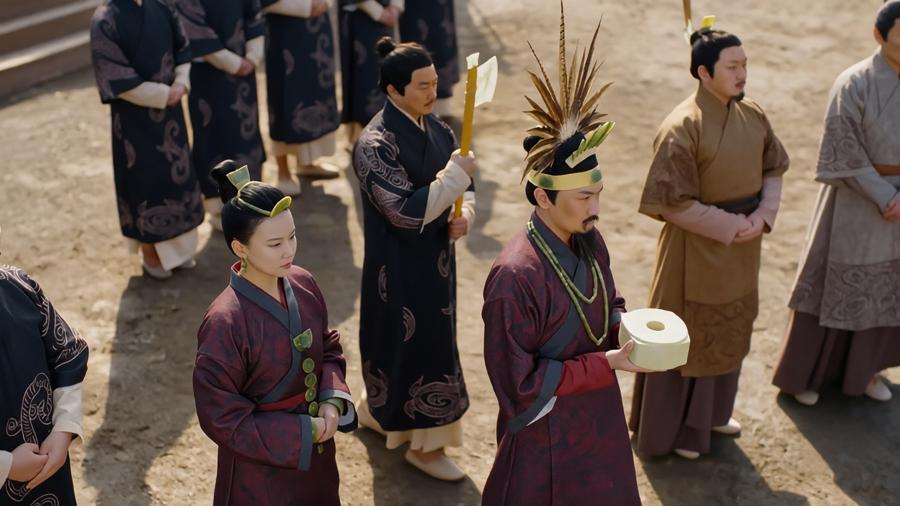
2.Jade as a Divine Medium: The Functional System of Jade Artifacts in Sacrificial Rituals
Shamans’ communication with the divine was not an abstract spiritual practice, but was conducted through a rigorous system of rituals and artifacts, with jade as the core material carrier of this system. Jade artifacts of different forms corresponded to different worship objects and ritual functions, constructing a complete set of ceremonial norms for "serving the deities with jade".
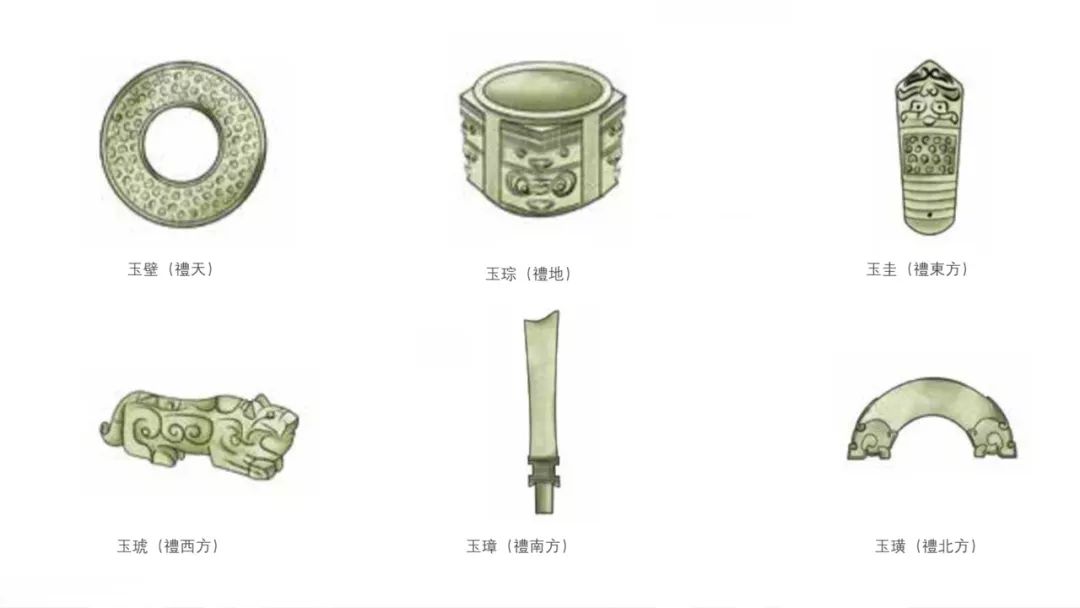
- System of ritual objects for worshipping heaven, earth and the four directions: The record in the later Rites of Zhou that "six jade objects are made to worship heaven, earth and the four directions" is precisely the systematic summary of the ancient shamanic jade sacrificial tradition. The cyan jade bi disk, with its round shape corresponding to the ancient cosmology of a round heaven, served as the token for shamans to communicate with the heavens. The yellow jade cong tube, with its circular interior and square exterior symbolizing the connection between heaven and earth, acted as a channel linking the mortal realm and earth deities. The green jade gui tablet, red jade zhang tablet, white jade hu tiger and black jade huang semi-disk corresponded respectively to the deities of the east, south, west and north, each fulfilling its role in different sacrificial scenarios. Through this system of jade artifacts, shamans were able to transmit human prayers to the gods of heaven and earth, and bring divine decrees back to the human world.
- Soul medium function in spiritual communication and burial rituals: Beyond public sacrifices, jade was also widely used in shamans’ personal spiritual communication ceremonies and funeral rituals. Jade huang pendants, jade jue slit disks and jade ornaments worn by shamans were auxiliary ritual tools for entering a state of divine communion, helping shamans focus their minds and invite deities. In funeral rituals, large numbers of jade artifacts were buried with the dead, forming the "jade burial" custom. Ancient ancestors believed jade could protect the soul of the deceased from dispersing, guide it to ascend to heaven and reunite with ancestral spirits. The burial custom of covering the entire body with jade in high-ranking Liangzhu tombs essentially relied on the divine nature of jade to help the tomb occupant — a shamanic leader — complete posthumous communication with the divine and sustain their theocratic status.
3. Enduring Cultural Legacy: Inheritance and Spiritual Evolution of the Shamanic Jade Tradition
After entering the Shang and Zhou dynasties, as theocratic power gradually shifted to royal power, the status of the shaman class declined. However, the shamanic jade tradition did not disappear; instead, it transformed and integrated into the broader system of Chinese civilization, becoming the spiritual source of Chinese jade culture for thousands of years.
- From shamanic jade to royal jade: the transformation of theocratic connotation into royal authority: During the Shang and Zhou dynasties, the Son of Heaven replaced shamans as the main performer of heaven worship, and jade artifacts shifted from exclusive tools of shamans to symbols of royal authority bestowed by heaven. The Zhou kings could not do without jade in worshipping heaven and earth, enfeoffing vassals, and conducting court audiences and alliances. Jade’s function of "communicating with the divine" was transformed into proof of the "Mandate of Heaven" — a monarch holding jade represented that their ruling power was granted by heaven. This transformation retained jade’s core connotation of connecting heaven and earth, only replacing the practitioner from shamans to emperors, thus continuing the theocratic logic of the shamanic jade tradition.
- From sacred object to moral talisman: infusion of humanistic spirit and folk inheritance: After the Spring and Autumn and Warring States periods, Confucianism endowed jade with five virtues: benevolence, righteousness, wisdom, courage and purity, transforming jade from a theocratic symbol into a carrier of the gentleman’s morality. Yet jade’s numinous quality never faded. Folk beliefs such as "wearing jade wards off evil" and "jade can avert misfortune", as well as customs of using jade ornaments for blessings in festivals and weddings, are essentially continuations of the ancient shamanic concept of jade as a "numinous object". Even today, the Chinese people’s esteem and affection for jade still carries the cultural gene of communicating with the divine and praying for blessings through jade from ancient times — an implicit inheritance of the shamanic jade tradition in the contemporary era.
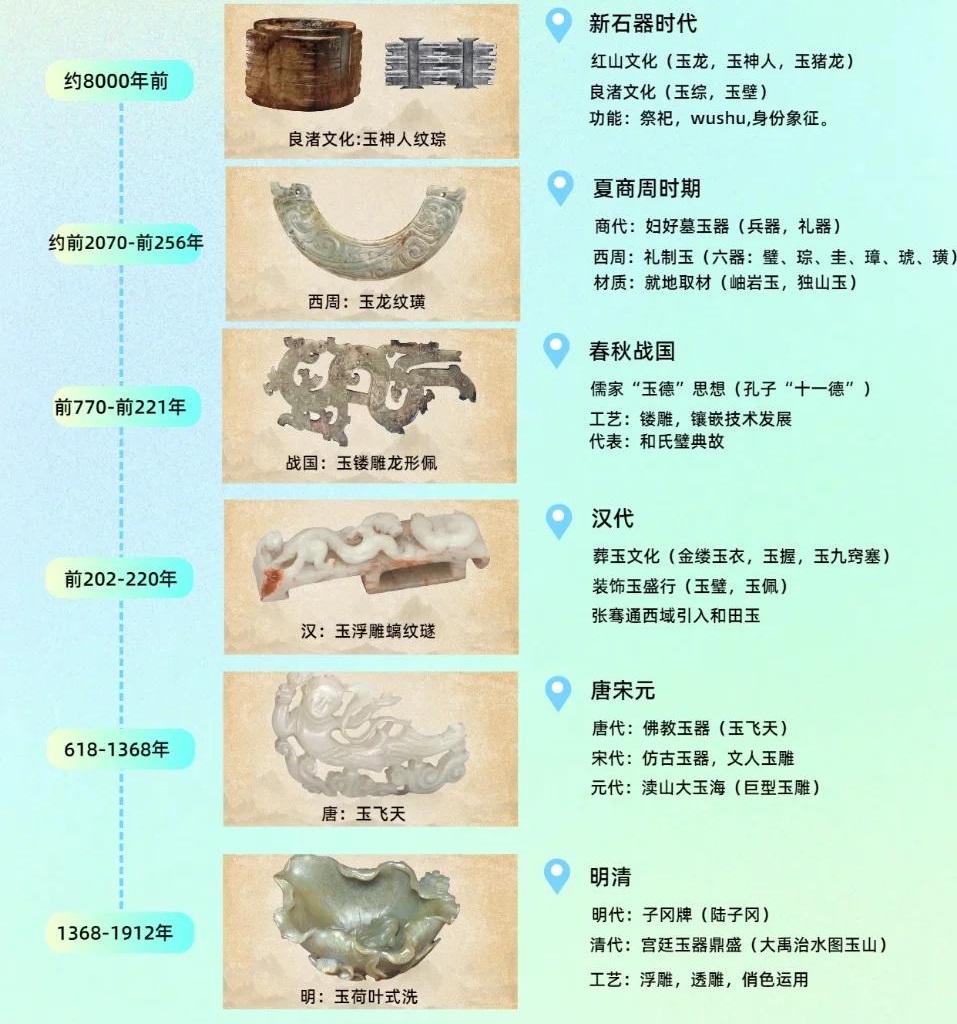
For thousands of years, jade has always carried spiritual meanings beyond its material value in Chinese culture. From a sacred object for ancient shamans to communicate with deities, to a ritual vessel for later emperors to manifest the Mandate of Heaven, and then to a talisman for ordinary people to protect themselves and pray for blessings, jade’s identity has kept changing. Yet its core attribute as a medium connecting the mortal world and the divine, reality and faith, has remained consistent. As the fountainhead of Chinese jade culture, the ancient shamanic jade tradition has not only established jade’s central position in Chinese civilization, but also shaped the deep-rooted jade worship complex of the Chinese people, becoming a living cultural gene that has remained vibrant across thousands of years.