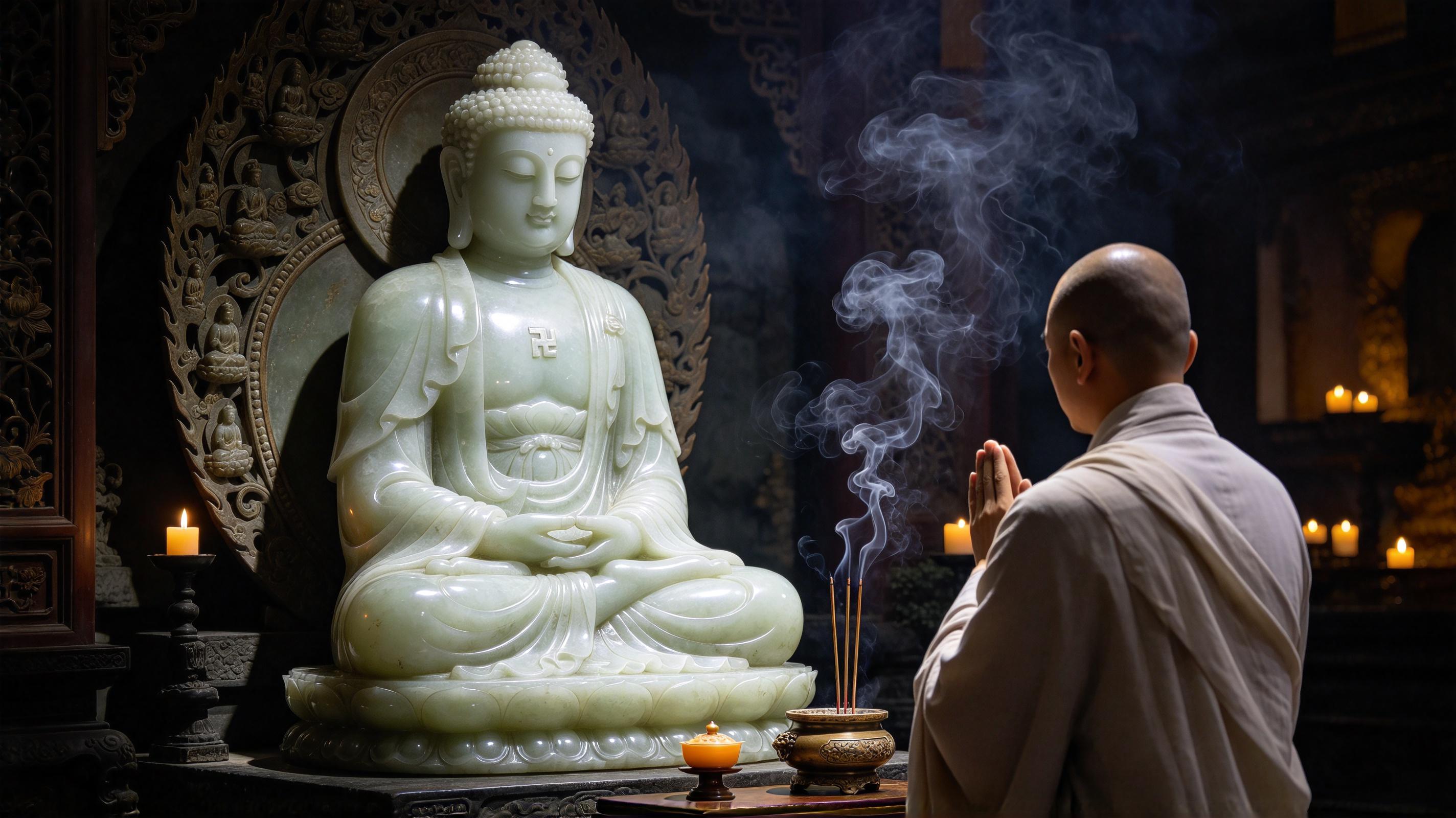
In the belief system of Chinese civilization, jade has always occupied a core position of connecting with the divine and embodying moral virtue. Since its introduction into China around the Han Dynasty, Buddhism has continuously interacted and integrated with the native culture of the Central Plains in the process of localization. When the warm, luminous jade meets the compassionate and inclusive Buddhist dharma, the two not only form a deep resonance in spiritual core, but also give birth to a unique art of jade Buddha statues. From being an accessory enshrined as one of the Seven Treasures at the beginning to finally forming a complete paradigm of Han-style jade Buddha statues, the evolution of jade's role is the most vivid material footnote to the Sinicization of Buddhism.
1.Jade in the Seven Treasures: The Sacred Status of Jade in the Early Spread of Buddhism
Buddhism originated in ancient India, and its offering system has long included the "Seven Treasures" — seven rare treasures in the world used to adorn the Buddha land and enshrine śarīra and scriptures. Although the specific categories of the Seven Treasures vary slightly in different Buddhist sutras, jade (usually precious stones like white jade and crystal) is always listed among them, regarded as a symbol of purity, solidity and rarity, representing the highest reverence for the Dharma.
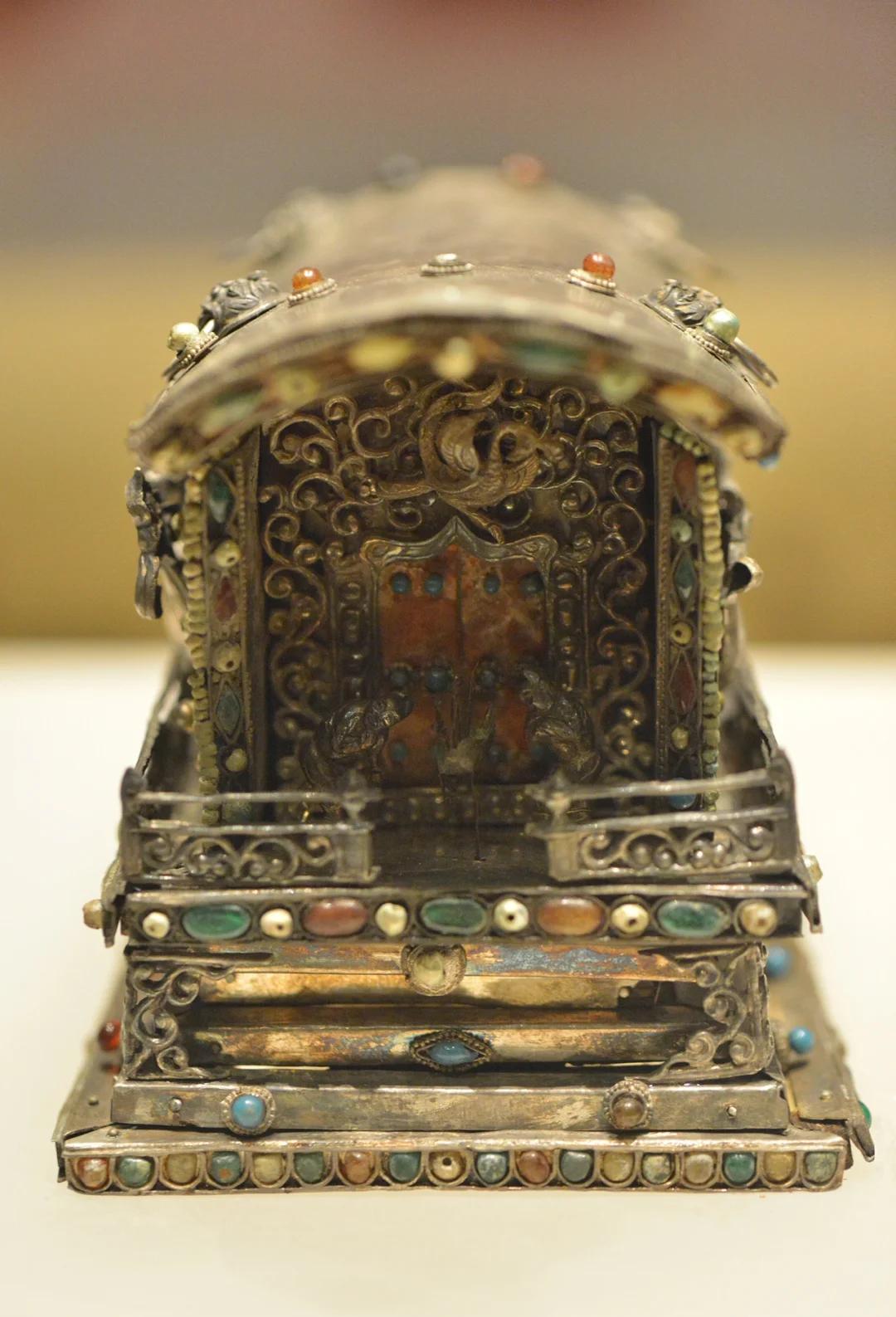
- The jade tradition of Buddhism in the Western Regions: When Buddhism spread eastward along the Silk Road, states in the Western Regions such as Khotan (modern Hotan, Xinjiang) were themselves famous jade producing areas. Local Buddhist belief was deeply bound to jade mining. Khotan jade was not only a key trade commodity, but also a core treasure for consecrating pagodas and decorating temples. A large number of jade śarīra containers and Buddhist decorative components were introduced into the Central Plains along the Silk Road, establishing the initial perception that "jade equals Buddhist treasure" among people in the Central Plains.
- Acceptance of native jade belief in the Central Plains: Long before the introduction of Buddhism, China had a jade culture tradition spanning thousands of years. Gentlemen compared their moral integrity to jade, and jade was regarded as a spiritual object connecting heaven and earth and carrying auspiciousness. This native jade worship gave people in the Central Plains a natural cultural identity with the jade of the Seven Treasures in Buddhism. The sacred attribute of jade did not need to be reconstructed; it only needed to align with Buddhist doctrines to quickly become the material carrier of Buddhist treasures.
2.Wei-Jin to Sui-Tang Dynasties: Localized Integration of Jade and Buddhist Doctrines
The Wei, Jin, Southern and Northern Dynasties were a critical period for the Sinicization of Buddhism. Under the trend of the integration of metaphysics (Xuanxue) and Buddhism, jade was no longer just a treasure for offerings, but began to merge with the core doctrines of Buddhism. By the Tang Dynasty, with imperial patronage and the maturity of jade carving techniques, jade Buddhist statues officially stepped onto the stage of history.
- New meaning of jade virtue under the mutual interpretation of metaphysics and Buddhism: Scholars in the Wei and Jin Dynasties advocated pure conversation. On the one hand, they interpreted Buddhist "śīla, samādhi and prajñā" with the Confucian ideal of "a gentleman compares himself to jade", believing that the warmth and purity of jade correspond to the pure and undefiled Buddha nature. On the other hand, they drew parallels between Taoist concepts of "jade dew" and "immortality" and Buddhist meditative liberation, endowing jade with spiritual connotation beyond materiality. This two-way interpretation upgraded jade from a simple offering to a cultural symbol carrying the spirit of Buddhism.
- Imperial Buddhist patronage and rise of jade statues in Tang Dynasty: The Tang Dynasty boasted strong national power, and Western Regions jade materials were continuously imported into the Central Plains. Coupled with the imperial family's devotion to Buddhism, jade Buddhist statues and ritual implements began to appear in large numbers. From the jade ruyi scepters and jade finger śarīra offering vessels unearthed from the Famen Temple Underground Palace to the jade Buddha statues depicted in Dunhuang murals, all prove that the Tang Dynasty had applied jade carving techniques to Buddhist statuary. At this time, jade Buddhas still retained characteristics of Western Regions statues — plump faces and robust figures — while integrating the gentle temperament of Han aesthetics.
3.Song, Yuan, Ming and Qing Dynasties: Maturity and Secularization of Han-Style Jade Buddha Statues
After the Song Dynasty, Buddhism fully completed its localized transformation. The rise of Chan Buddhism brought the Dharma to the general public, and jade statues also broke away from the exclusive attribute of imperial enshrinement, forming a mature Han-style jade Buddha aesthetic that reached its artistic peak in the Ming and Qing Dynasties.
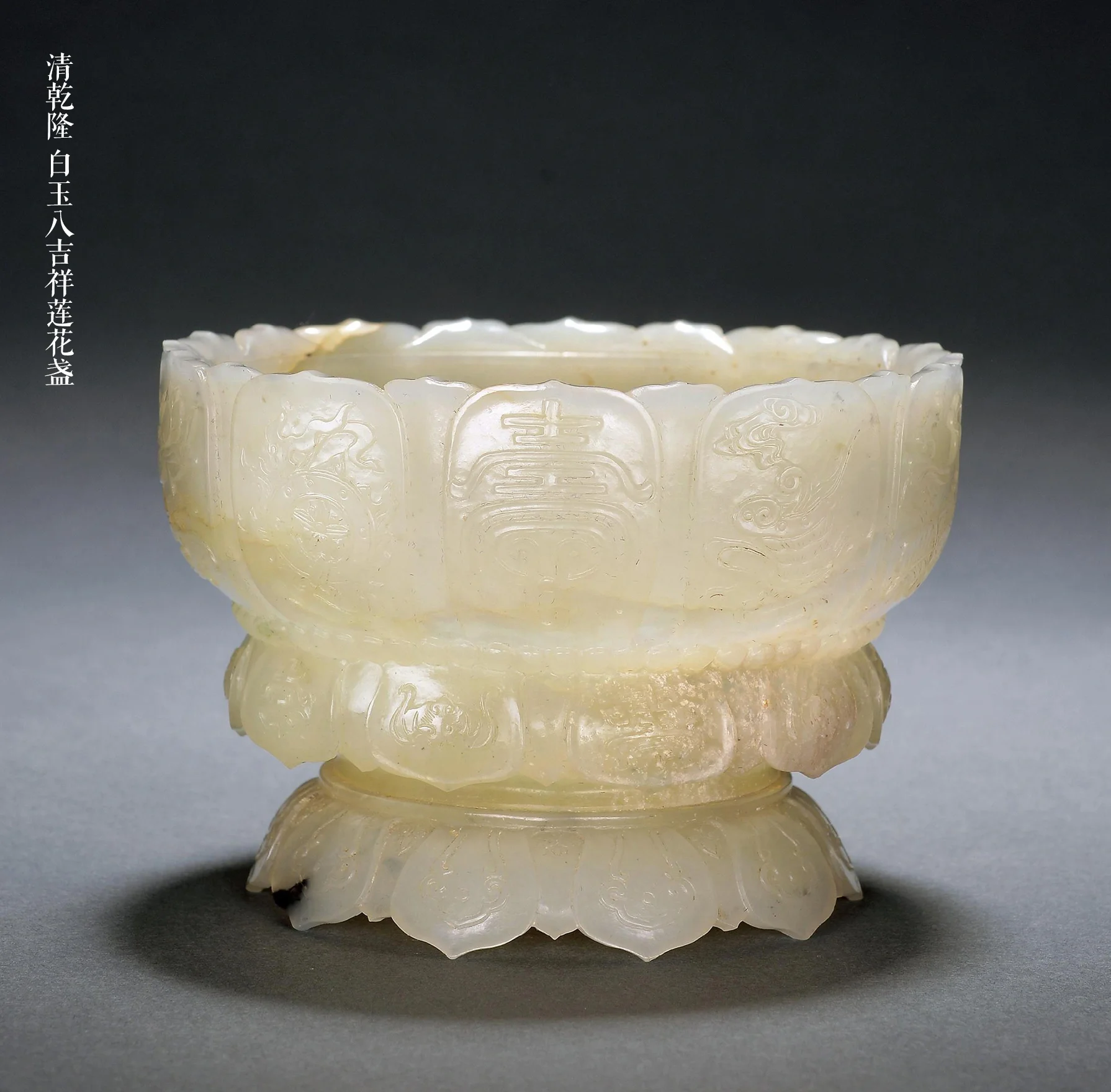
- Song Dynasty civic culture and popularization of jade Buddhas: The Song Dynasty had a prosperous commodity economy and a rising citizen class. Small jade Buddha pendants and portable jade Guanyin statues became popular blessing accessories. At this time, jade Buddha statues gradually shed the Western Regions paradigm, with more delicate and soft faces and realistic clothing lines, full of the warmth of secular life. The professionalization of the jade carving industry also refined statuary techniques, forming the basic style of "Han-style jade Buddha".
- Peak of jade Buddha statues in Ming and Qing Dynasties: The Ming and Qing Dynasties were the golden age of ancient Chinese jade carving. Especially during the Qianlong period of the Qing Dynasty, Hotan jade was mined in large quantities, and the imperial workshop gathered top craftsmen from across the country to create countless exquisite jade Buddha statues. During this period, jade Buddhas fully formed the Han aesthetic paradigm: Sakyamuni statues have solemn and perfect faces, Guanyin statues are gentle and compassionate, and Maitreya statues are festive and humorous. They are not only sacred objects for religious worship, but also important categories for collection and display in the imperial court and among the people.
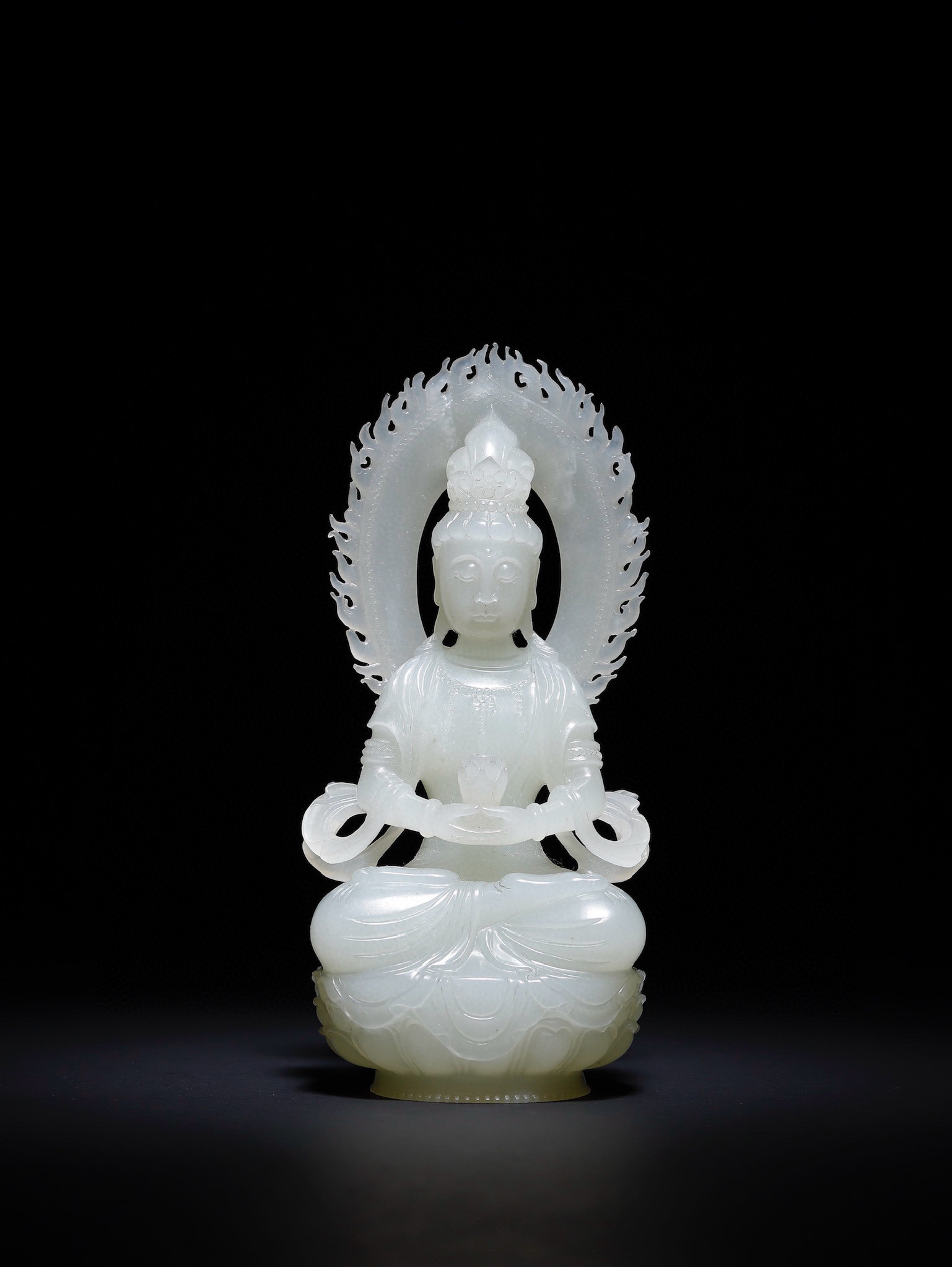
Looking at the thousand-year evolution from the Seven Treasures to jade Buddha statues, jade has long transcended its simple material attribute and become a typical carrier of cultural integration in the Sinicization of Buddhism. The sacred concept of ancient Indian Buddhism encountered the jade culture inherited for thousands of years in the Central Plains, and finally settled into the art of jade Buddha statues with both religious connotation and Oriental aesthetics. It is not only a historical witness of the eastward spread of Buddhism, but also a cultural epitome of the inclusiveness and vitality of Chinese civilization, which still continues its vitality in contemporary jade art and religious life.