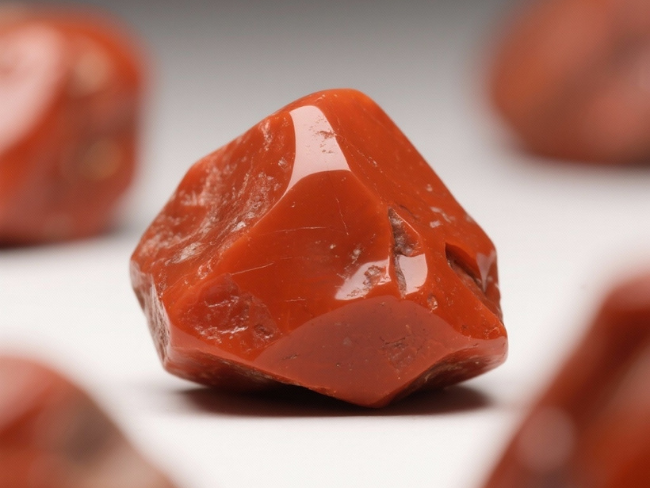
If you’ve ever shopped for Nanhong—known as the "Oriental Red Jade"—in a jewelry market or live stream, you may have heard convincing promises of "natural color" and "premium quality." But too often, what arrives is dyed agate or resin-filled low-grade stone. With Nanhong's value rising yearly, fake products have flooded the market, making it easy for beginners to lose money.
You don’t need to be an expert to avoid scams. Here are 5 practical methods to identify authentic Nanhong red agate—no special tools required.
1. Observe the Red: Natural Color Has “Life”
Many believe that a bright, uniform red means better Nanhong. In reality, that’s often a sign of dyeing.

🔍 Quick tip: Shine a flashlight from the side. Real Nanhong reveals tiny red dots (cinnabar spots) scattered inside like stars in the night sky. Dyed fakes often show blurry color or surface-level staining that may rub off.
A follower once bought a "persimmon red" bracelet for $100. Under light, it showed no cinnabar spots—just dyed white agate worth less than $10.
2. Feel the Texture: Warm and Oily, Not Slippery
Texture doesn’t lie. Authentic Nanhong has a fine, oily smoothness—like a baby’s skin or a polished egg—that feels warm to the touch. Over time, it develops a soft, glossy sheen known as "gel texture."
-
Resin-injected fakes feel dull and plastic-like.
-
Glass or ordinary agate imitations feel cold and slippery.
-
Plastic fakes are lightweight and can be scratched with a nail—unreal for agate, which is hard enough to scratch glass.
3. Check the Patterns: Nature Isn’t Perfect
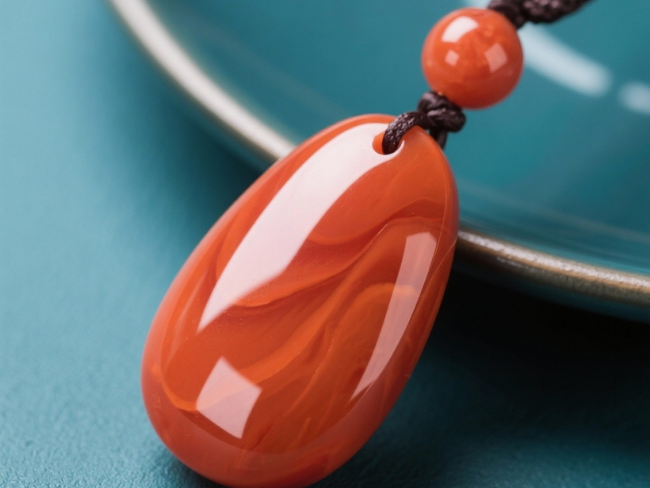
Natural patterns are your best authenticity clue. Real Nanhong may contain:
-
"Water lines": translucent streaks from mineral flow.
-
"Flame patterns": wavy, irregular markings resembling flickering fire.
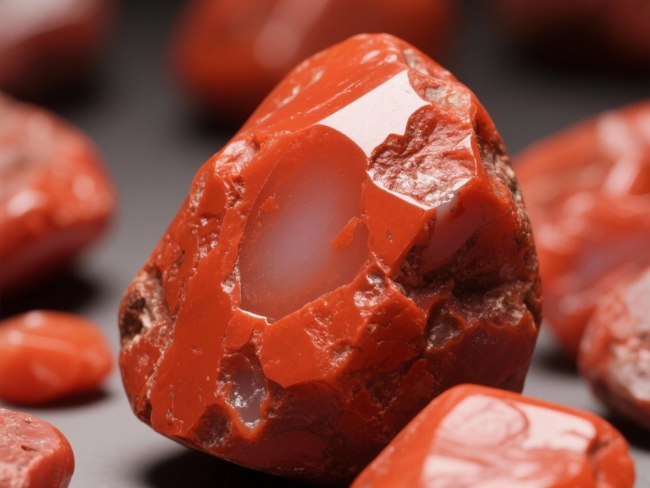
These forms are organic and asymmetrical. Fakes often show:
-
Obvious "banded patterns" from dyed agate, with harsh red-white lines.
-
Printed or overly symmetrical "flame patterns" that look mechanically repeated.
One carved fake had perfectly mirrored "flames"—a clear sign it was synthetic.
4. Use a UV Light: Reveals Resin Injection
A small 365nm UV flashlight is a beginner’s best friend for spotting resin-filled Nanhong. Sellers often inject epoxy to conceal cracks in low-quality stones.
-
In a dark setting, shine the light on the stone.
-
Resin-treated fakes reveal bright blue-white fluorescence along cracks or fills.
A customer bought a "crack-free" Nanhong bracelet from a live stream. Under UV light, the entire piece glowed—she had been scammed out of hundreds of dollars.
5. Always Request a Certificate for High-Value Pieces
If you’re spending more than a couple hundred dollars—especially on carvings or bracelets—always ask for a reputable gem lab report.
Look for a Nanhong Agate designation (not just "Agate") from labs like NGTC (National Gemstone Testing Center). The report should confirm:
-
Density (~2.55–2.91 g/cm³)
-
Refractive index (~1.535–1.539)
-
No resin filling (avoid any marked "Treated")
Be wary of certificates from unknown or unverifiable sources.
Final Advice
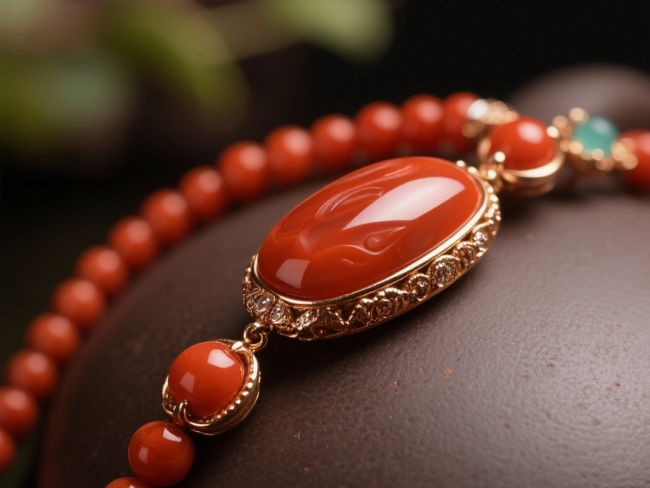
True Nanhong captivates with its natural color, silky texture, and cultural depth. Don’t chase the reddest or cheapest piece—choose what’s genuinely natural. A small, authentic Nanhong is better than a large fake. Wear it, enjoy it, and let it mature with you.