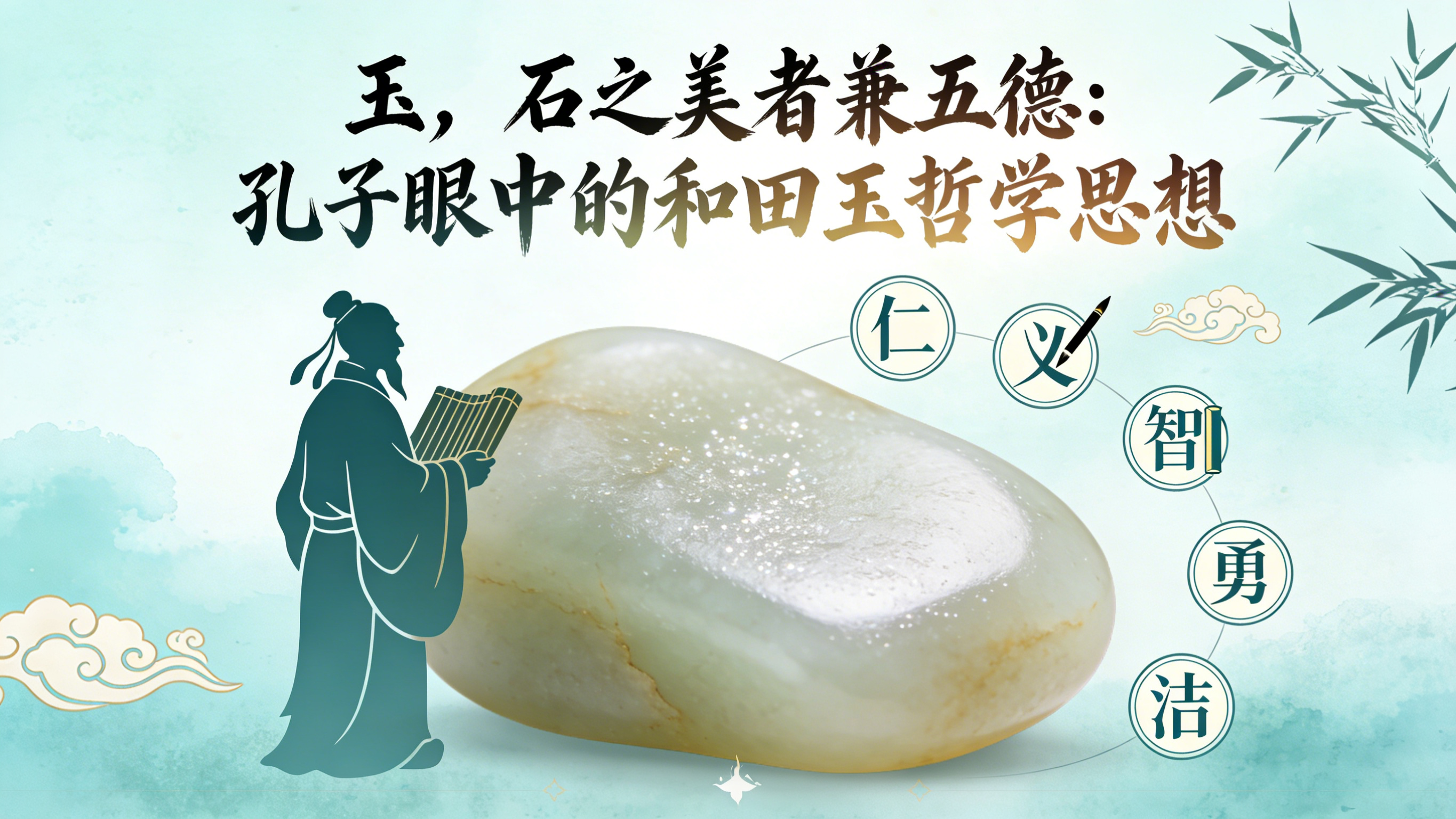
In the long river of Chinese traditional culture, Hetian jade is far more than a rare and precious stone with exquisite texture and translucent luster. It is a cultural symbol that carries the core of Confucian thought and the pursuit of a gentleman's moral character. As early as more than 2,000 years ago, Confucius put forward the view of "jade has five virtues" from the perspective of Confucianism, endowing the natural attributes of Hetian jade with profound moral connotations, making jade transcend the material itself and become the embodiment of a gentleman's conduct and the materialization of Confucian philosophy. For thousands of years, this thought has been rooted in the hearts of the Chinese nation, and Hetian jade has also become an irreplaceable cultural treasure in the Chinese cultural system.
The Five Virtues of Jade: The Spiritual Core Endowed by Confucius to Hetian Jade
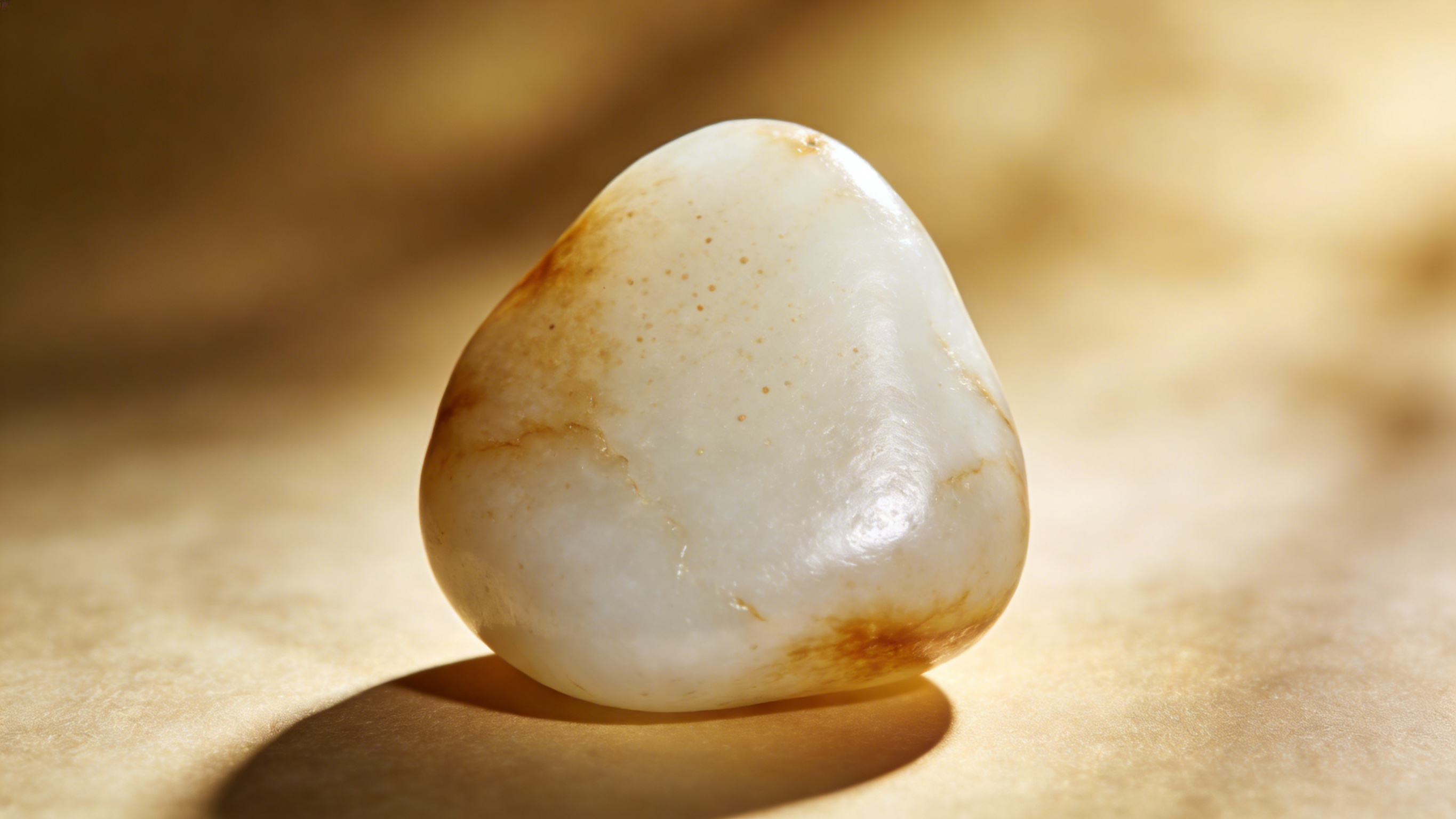
Confucius' discussion of the five virtues of jade is not a random attribution, but a profound integration of the natural physical characteristics of Hetian jade with the Confucian pursuit of a gentleman's moral character. He extracted the five virtues of benevolence, righteousness, wisdom, courage and purity from the texture, luster, texture, sound and quality of Hetian jade, and each virtue corresponds to the moral norms that a gentleman should abide by, forming a complete ideological system of "jade is like a gentleman".
- Benevolence: Hetian jade is warm and moist, with a delicate texture that is as soft as human skin when touched. This natural warmth is like the benevolence of a gentleman. A benevolent person is kind-hearted, cares for all things in the world, and is gentle and modest in dealing with others, just like the warm luster of Hetian jade that nourishes people's hearts.
- Righteousness: The texture of Hetian jade is clear and orderly, with a consistent inside and outside, and there is no false trace. This characteristic corresponds to the righteousness of a gentleman. A man of righteousness abides by moral bottom lines, acts in accordance with norms, is impartial in doing things, and is as open and aboveboard as the clear texture of Hetian jade.
- Wisdom: Hetian jade has a dense and delicate texture, and when it is struck, it makes a clear, distant and melodious sound that lingers. This is like the wisdom of a gentleman. A wise man is thoughtful, has a clear mind, speaks in a measured way, and his words and deeds are as clear and powerful as the sound of Hetian jade.
- Courage: Hetian jade is hard and firm, with a tough texture. It would rather break than bend under external force, and will never yield or deform. This tenacity symbolizes the courage of a gentleman. A brave man adheres to his original heart, sticks to his beliefs, and is unyielding in the face of difficulties and setbacks, just like Hetian jade that remains unyielding despite trials and hardships.
- Purity: Hetian jade is crystal clear and spotless, with a clean and transparent luster, and is not contaminated by dust. This pure quality is the embodiment of a gentleman's purity. A man of pure conduct is noble and unsullied, abides by his moral integrity, and is as clean and untainted as Hetian jade all his life.
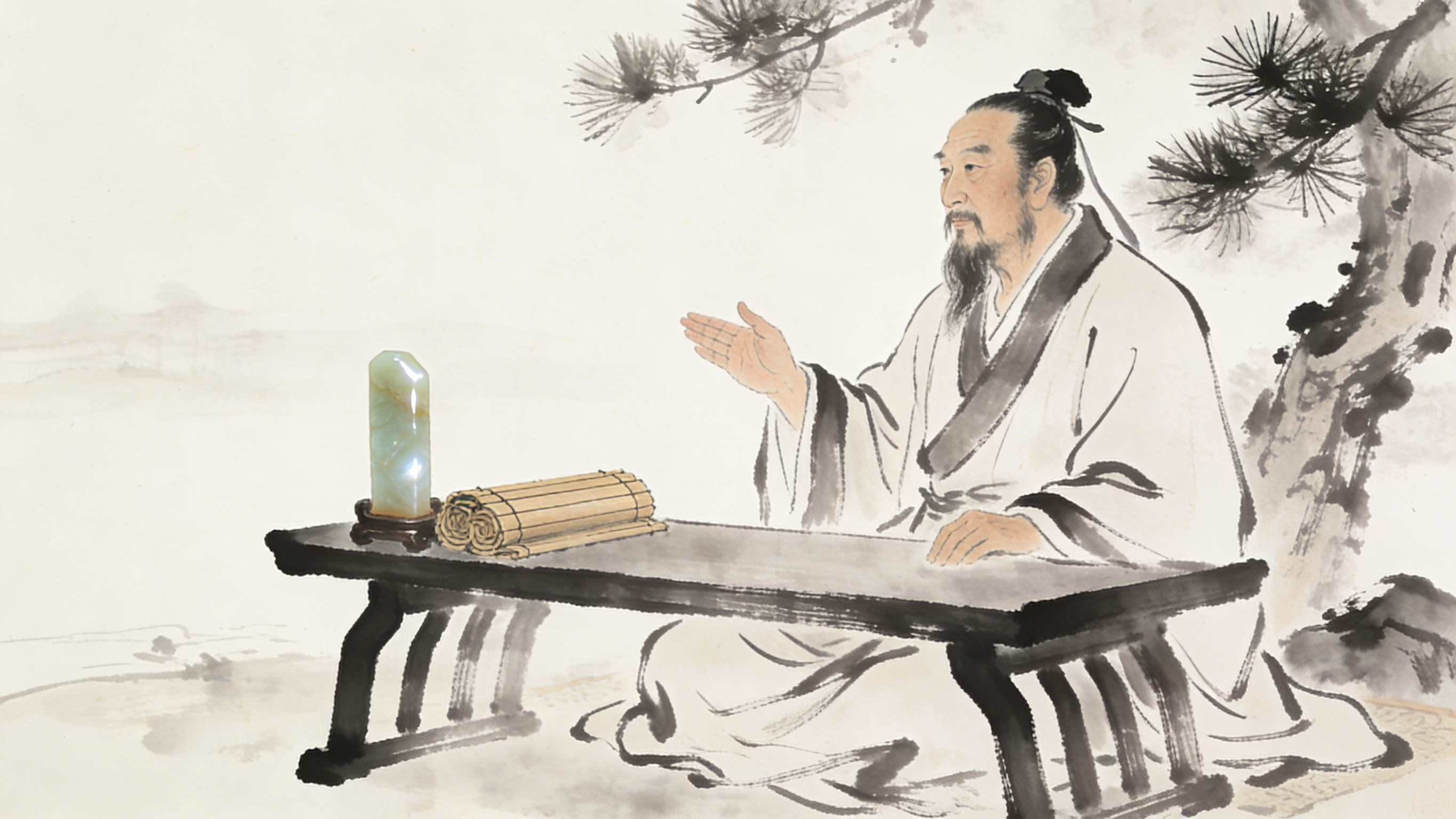
The Coexistence of Form and Virtue: The Natural Beauty of Hetian Jade Conforms to the Confucian Way of a Gentleman
Hetian jade, produced in the Kunlun Mountains at the junction of China's Xinjiang region, has experienced hundreds of millions of years of geological tempering, including crustal movement, water erosion and sand grinding, before it forms the unique warm and delicate texture, pure and translucent color and tough and firm quality. Its natural beauty is not aggressive, but gentle and restrained, which is highly consistent with the Confucian aesthetic pursuit of a gentleman's "modesty and prudence, inner strength and outer softness".
Confucianism advocates that a gentleman's self-cultivation is not deliberate posturing, but the tempering of the heart and the polishing of morality in the trials of life, just like Hetian jade, which has experienced hundreds of millions of years of honing and still retains its original heart and inherent quality. The warm luster of Hetian jade is the external expression of a gentleman's kindness; the clear texture is the external reflection of a gentleman's uprightness; the dense quality is the embodiment of a gentleman's wisdom; the unyielding toughness is the manifestation of a gentleman's courage; the spotless purity is the portrayal of a gentleman's noble character. The natural form of Hetian jade and the five virtues endowed by Confucius complement each other, making the Confucian concept of a gentleman no longer an abstract moral standard, but a concrete and perceptible image.
Jade Virtues Integrated into China: Hetian Jade Becomes a Cultural Carrier of Confucian Thought
Since the pre-Qin period, the thought of "jade has five virtues" has been deeply rooted in the social and cultural life of the Chinese nation, and Hetian jade, as the representative of jade, has gradually become an important cultural carrier of Confucian thought, running through all aspects of ancient Chinese society from royal rituals to folk life.
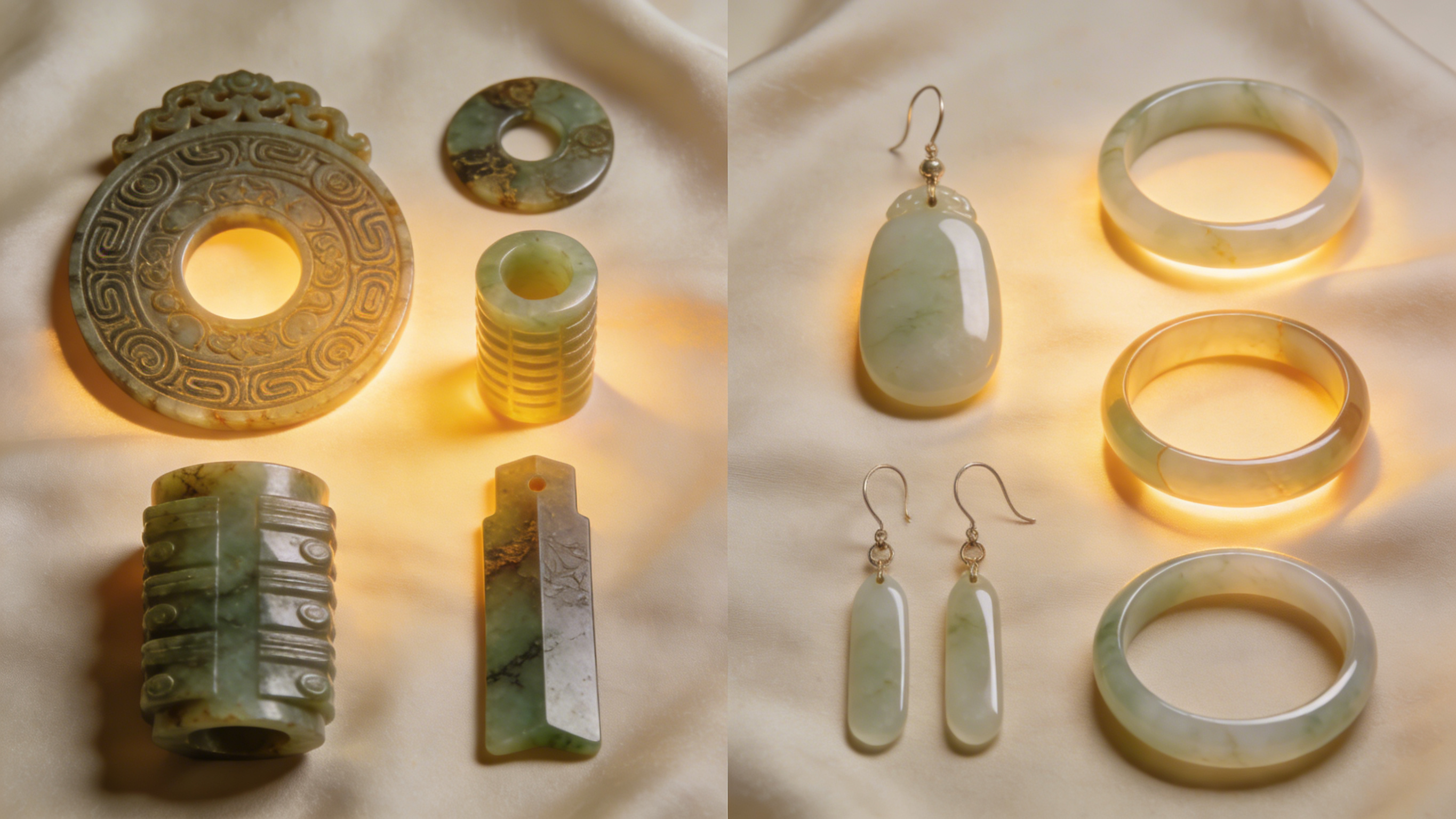
In the royal court, Hetian jade was made into ritual vessels such as jade bi, jade gui and jade zhang, which were used in important ceremonies such as sacrifices, court meetings and enfeoffments. The imperial power used the five virtues of Hetian jade to symbolize the orthodoxy of imperial power and the moral cultivation of the monarch. A qualified emperor should be like Hetian jade, with benevolence to govern the country, righteousness to manage officials, wisdom to make decisions, courage to overcome difficulties, and purity to keep the court clean. The jade ritual vessels made of Hetian jade have thus become a symbol of imperial power and moral norms.
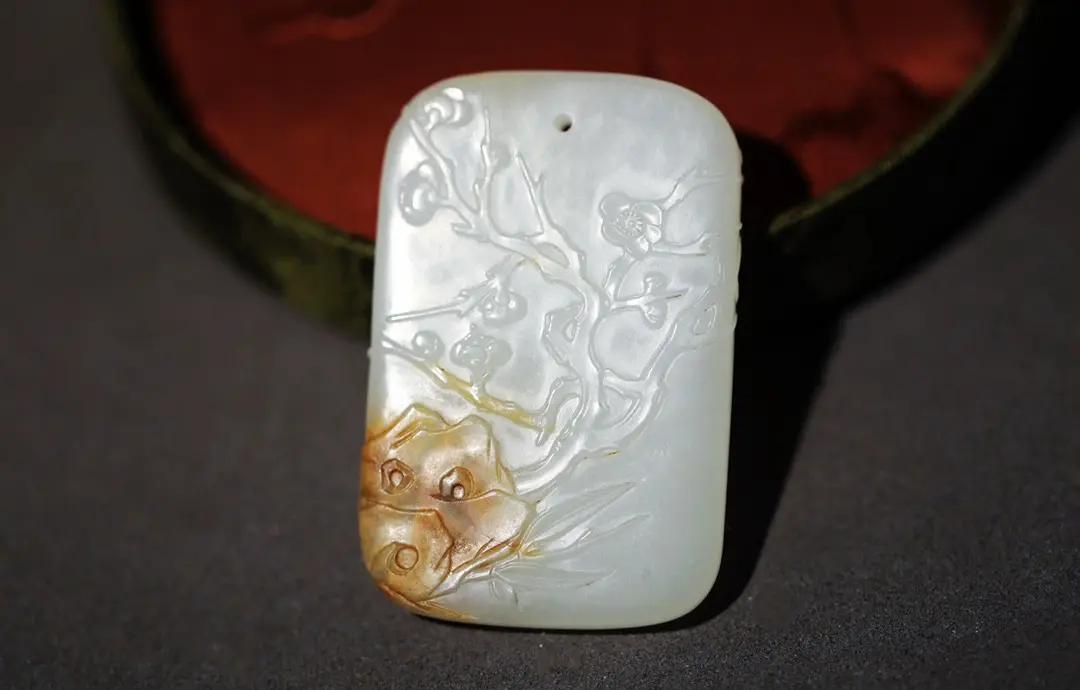
In the folk, Hetian jade has become a necessary accessory for literati and refined scholars. They wear Hetian jade pendants and jade ornaments close to their bodies, taking the meaning of "keeping jade in mind and self-examining at all times", and using the five virtues of jade to warn themselves to abide by moral norms and polish their personal conduct. For ordinary people, Hetian jade is also a symbol of good wishes. People give each other Hetian jade artifacts to express their hopes for each other to have a gentleman's character and a smooth life. From the royal family to the common people, the five virtues of Hetian jade have been integrated with the Confucian thought of "self-cultivation, family harmony, country governance and world peace", becoming an important part of traditional Chinese culture and an indelible cultural gene of the Chinese nation.
Millennium Echo: The Contemporary Value of the Five Virtues of Hetian Jade
Time flies, and thousands of years have passed. The social form has changed dramatically, but the five virtues of Hetian jade endowed by Confucius have not faded with the passage of time, but have burst out new vitality in the contemporary era, becoming a spiritual guide for people to cultivate themselves and establish themselves in the world.
In modern society, people's pursuit of material life is constantly satisfied, and the pursuit of spiritual and moral character is also rising. People appreciate and collect Hetian jade, not only for its rare material beauty and collection value, but more for the recognition of the five virtues of benevolence, righteousness, wisdom, courage and purity behind it. In the workplace, people take the "benevolence" of jade to treat colleagues and customers, take the "righteousness" of jade to abide by professional ethics, take the "wisdom" of jade to make work decisions, take the "courage" of jade to face work difficulties, and take the "purity" of jade to keep their original heart in the complicated workplace. In daily life, people use the five virtues of jade to educate their children, teach them to be kind, upright, wise, brave and pure, and let the traditional moral culture be passed on from generation to generation.
Hetian jade is no longer just a precious stone in the contemporary era, but a bridge connecting ancient and modern traditional culture. Its five virtues link the Confucian thought of the pre-Qin period with the spiritual pursuit of modern people, making the excellent traditional Chinese culture rooted in the contemporary society. The inheritance of the five virtues of Hetian jade is not only the inheritance of jade culture, but also the inheritance and carry forward of the core moral connotations of Confucianism, the most important part of Chinese traditional culture.
For thousands of years, Hetian jade has gone beyond the attribute of a precious stone and become an important spiritual symbol of Chinese traditional culture because of the five virtues endowed by Confucius. The thought of jade virtues proposed by Confucius has nourished the Chinese nation for more than two thousand years, making the pursuit of a gentleman's moral character a common cultural cognition of the Chinese people. In the future, with the inheritance and promotion of traditional culture, the beauty and virtue of Hetian jade will continue to bloom in the long river of time, and the profound philosophical thought contained in it will also continue to guide the Chinese nation to move forward, making the excellent traditional Chinese culture immortal and eternal.