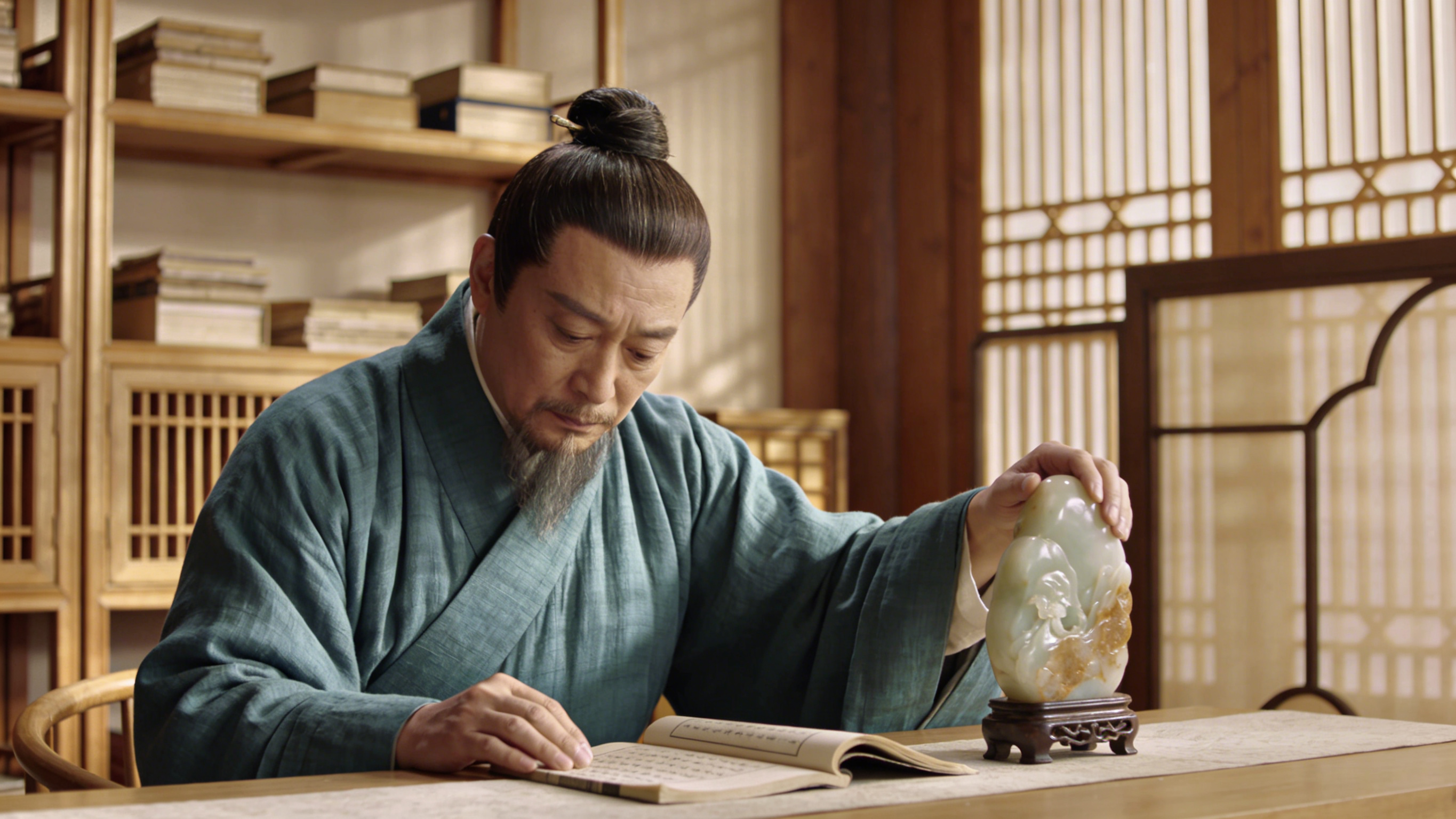
In Chinese traditional culture, Hetian Jade is far more than a precious stone—it’s a spiritual symbol rooted in the heart of the nation, carrying the moral pursuit and emotional sustenance of ancient literati for more than two thousand years. Its rich cultural connotations are rooted in its unique texture, the jade virtue theory of the pre-Qin scholars, and the deep integration into classical poetry and prose. Let’s unpack why this "treasure of Kunlun" has become an eternal inspiration for literati.
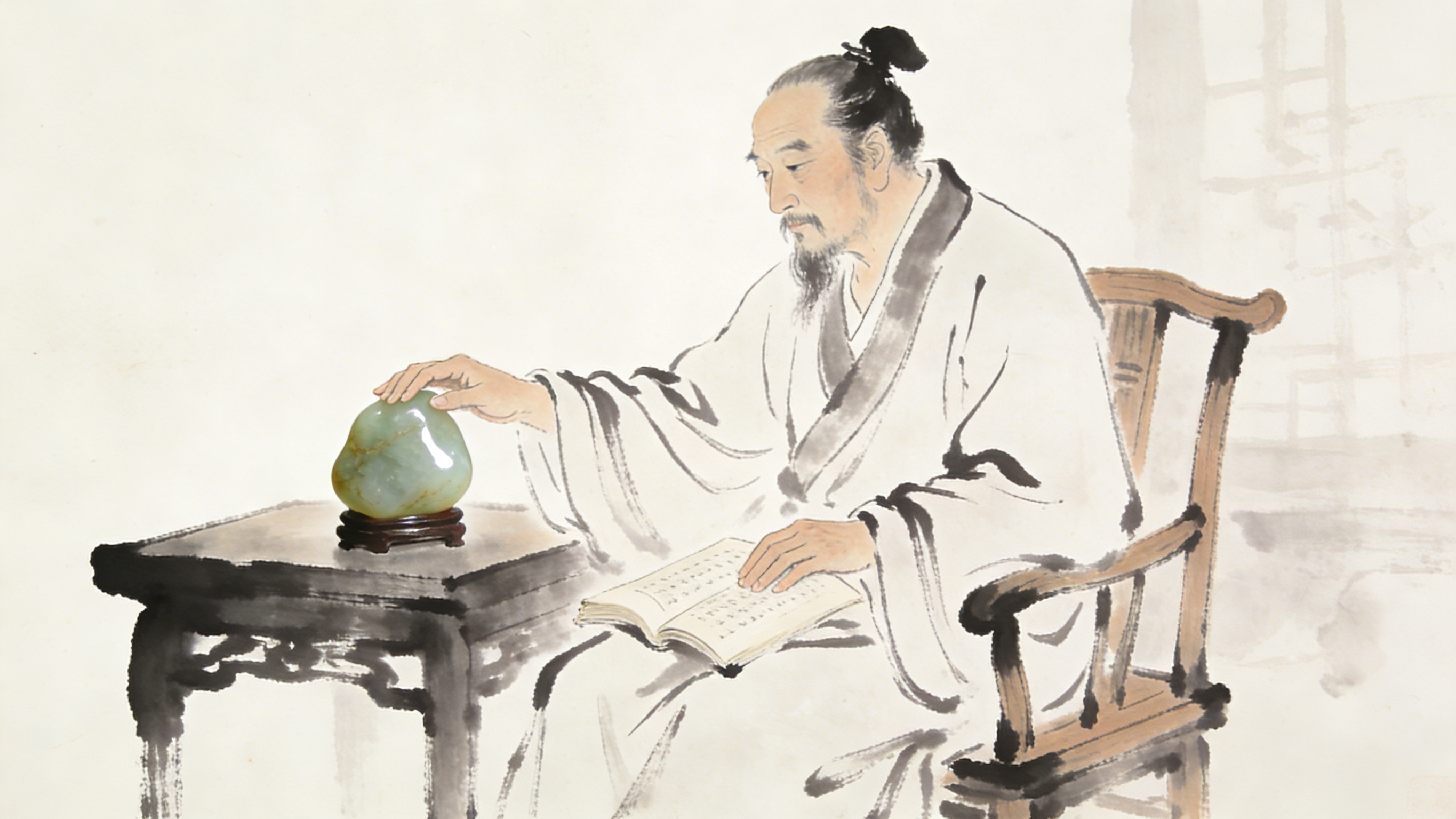
- Jade Virtue and Literati Spirit: A Soulful Alignment
Hetian Jade has become the core inspiration for literati fundamentally because its natural texture is highly consistent with the spiritual pursuit of literati. Since ancient times, the Chinese have held the concept of "a gentleman compares his virtue to jade", which originated in the pre-Qin period and was continuously enriched in later dynasties, becoming the spiritual criterion for literati's conduct. Hetian Jade, with its unique characteristics, is the most perfect embodiment of "jade virtue".
- The Perfect Carrier of Confucian Jade Virtue: In the Spring and Autumn Period, Confucius first proposed that "a gentleman compares his virtue to jade", endowing jade with eleven virtues such as benevolence, wisdom, righteousness, courtesy, music, loyalty and faith, and integrating the physical characteristics of jade with the moral cultivation of a gentleman. In the Eastern Han Dynasty, Xu Shen further condensed the "Five Virtues" of jade in Shuowen Jiezi: moist and warm for benevolence, transparent inside for righteousness, clear and distant sound for aspiration, unyielding and firm for courage, and sharp but not hurtful for purity. Hetian Jade's moist and delicate texture, hard quality and clear sound correspond exactly to the "Five Virtues", making it the best symbol of a gentleman's character in the hearts of literati.
- Spiritual Sustenance of Kunlun Belief: Hetian Jade is produced in the Kunlun Mountains. The ancients regarded the Kunlun Mountains as a sacred place of "the center of heaven and earth", and believed that Hetian Jade is a spiritual object connecting heaven and earth. Qu Yuan wrote in Nine Odes·Crossing the River: "Climb the Kunlun Mountains to eat jade flowers, live as long as heaven and earth, and shine as bright as the sun and the moon", linking Hetian Jade with a transcendent spiritual realm. This reverence for Kunlun Jade has become an important sustenance for literati to pursue spiritual purity, and also gives the imagery of Hetian Jade a deeper cultural heritage in poetry and prose.

- Ode to Jade in Poetry and Prose: Inheritance of Imagery for Thousands of Years
From the Songs of the South in the pre-Qin period to Tang poetry and Song ci, from Han fu and Yuan qu to Ming and Qing prose, the imagery of Hetian Jade has run through the development of classical Chinese literature. Literati expressed their aspirations, emotions and portrayed people with jade, making Hetian Jade no longer a simple stone, but a literary symbol carrying emotions and entrusting ideals, which has been enduring in poetry and prose for thousands of years.
- Sacrificial Ritual Vessels: A Solemn Expression of the Country and the World: Hetian Jade has been an important ritual vessel for ancient sacrifices and court visits since ancient times. The Rites of Zhourecords that "jade is used to make six vessels to worship heaven, earth and the four directions", and all ritual vessels such as green bi and yellow cong are made of Kunlun beautiful jade. This cultural tradition of "hiding rituals in vessels" makes Hetian Jade a symbol of the country and the society in poetry and prose. In the jade-ode poems of Tang poets, jade bi and jade zhang are often used to symbolize the orthodoxy of the dynasty, and the firmness of jade to symbolize the peace of the country, integrating the expectations for the country into the imagery of jade.
- Gentleman Wearing Jade: A Self-portrait of Noble Character: "When I think of the gentleman, he is as warm as jade", this line in The Book of Songshas established a close connection between jade and gentlemen. Ancient literati often expressed their aspirations by wearing jade, wearing Hetian jade ornaments on their bodies and engraving the character of jade in their hearts. Li Bai outlined the moistness of jade in Lament on the Jade Stairswith "White dew forms on the jade stairs, soaking the silk socks after a long night", actually describing people's character by the purity of jade; Lu You wrote "Gold and jade have their essence, how can they not be strong", using the hard texture of Hetian Jade to metaphor his own unyielding patriotic integrity, making the imagery of jade a portrait of the literati's self-character.
- Beautiful Wishes: Poetic Sustenance of Life and Ideals: Hetian Jade also often appears in literati's depictions of beautiful things, becoming a symbol of happiness, perfection and longevity. Li Bai described the mellow beauty of wine with "A jade bowl holds amber light" in Traveling as a Guest, setting off the beauty of life with the exquisiteness of the jade bowl; Yan Shu used "The jade toad is cold and the sweet-scented osmanthus is lonely" to compare jade to the moon in Mid-Autumn Moon, outlining an elegant artistic conception; Emperor Qianlong's imperial poem Hetian Jadedepicted the mining of Hetian Jade with "Jade miners in Yutian pan for jade in the jade river", praising the preciousness of jade and entrusting the beautiful wishes for the peace of the border areas and cultural integration.
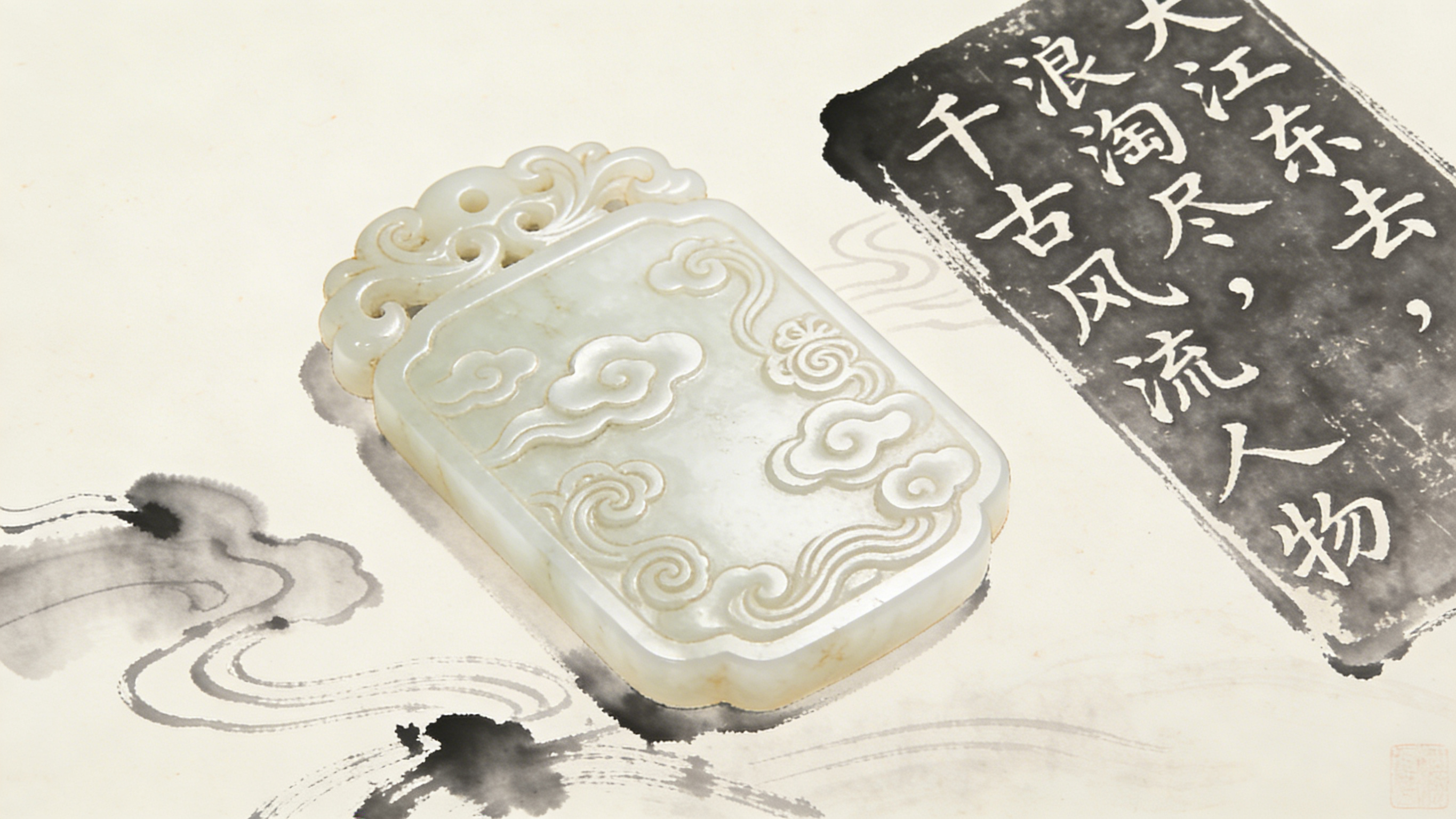
- Jade Blending with Literature and Calligraphy: Diverse Expressions of Literati Creation
The inspiration nourishment of Hetian Jade for literati is not only reflected in the ode of poetry, but also integrated into various creative forms such as prose, painting and calligraphy, seal cutting, becoming an important part of the literati's spiritual world. From prose that uses jade to metaphorize truth, to painting and calligraphy with jade patterns, and to seal cutting with jade seals carved with characters, Hetian Jade adds a moist background to literati creation in diverse forms.
- Jade-ode Prose: In-depth Interpretation of Jade Virtue: In addition to poetry, literati also interpreted jade virtue and jade culture in depth in the form of prose. Ode to Jadeby Yang Xiong in the Han Dynasty and Ode to Jadeby Fu Xuan in the Western Jin Dynasty both depict the beauty of Hetian Jade's texture with gorgeous words, and at the same time expound Confucian moral thoughts through the character of jade, integrating jade virtue with the principles of life, making the cultural connotation of jade more systematically expressed in prose.
- Jade in Painting and Calligraphy: Moist Sublimation of Artistic Conception: In classical painting and calligraphy, the imagery of Hetian Jade and jade artifacts are often creative themes. Literati painters often paint jade pots, jade ink slabs and jade pendants, integrating with imagery such as plum blossoms, orchids, bamboos and chrysanthemums to outline an elegant artistic conception; in calligraphy works, the fluency and beauty of brush and ink are often described as "as moist as jade and as round as pearls", combining the moist texture of Hetian Jade with the lingering charm of calligraphy, making painting and calligraphy works more possess the moist beauty of oriental aesthetics.
- Jade Seal Cutting: Firm Carving of Original Aspiration: Hetian Jade is a top-grade material for seal cutting due to its hard and delicate texture. Ancient literati often made seals with Hetian Jade, carving their own names and interests on the jade seals, not only because the firmness of jade seals symbolizes the unchanging original aspiration, but also because the moistness of jade metaphorizes noble character. From the literati's leisure seals to the official seals of officials, Hetian Jade seals have become a dual symbol of literati's identity and spirit, and the characters carved on each jade seal are the firm carving of the literati's self-pursuit.
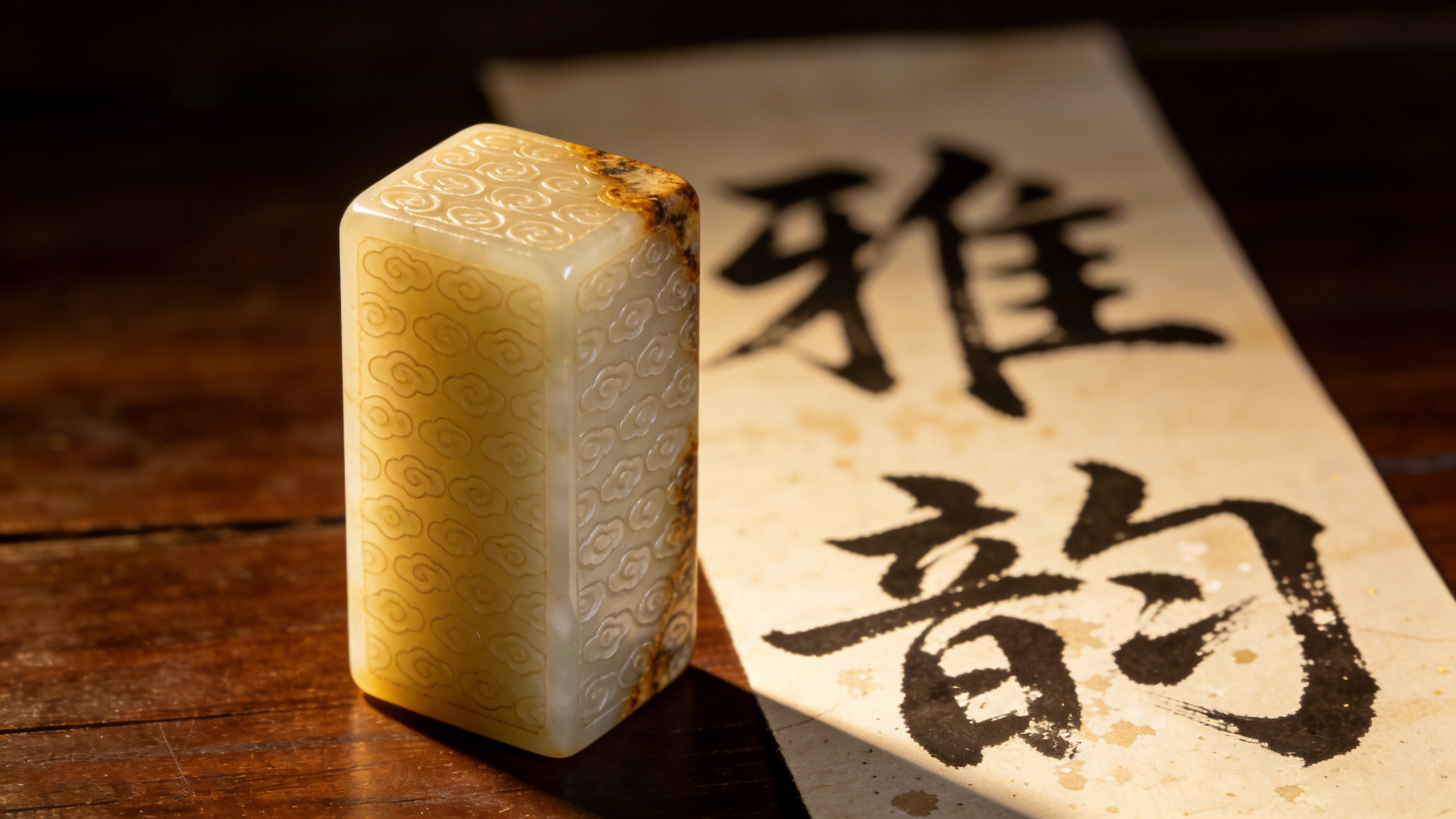
For thousands of years, Hetian Jade has evolved from a raw stone in the Kunlun Mountains to a cultural symbol entering the spiritual world of literati. With its moist texture and noble character, it has provided an endless source of creative inspiration for literati. In classical poetry and prose, jade is the character of a gentleman, the expectation of the country, the poetry of life, and the eternal background of the literati's spiritual world. Even today, when we read the poems and prose eulogizing jade, we can still feel the spiritual pursuit and cultural feelings of ancient literati from the imagery of jade. Hetian Jade, this "treasure of Kunlun", still shines with a moist light in the years, becoming a spiritual link connecting ancient and modern cultures.